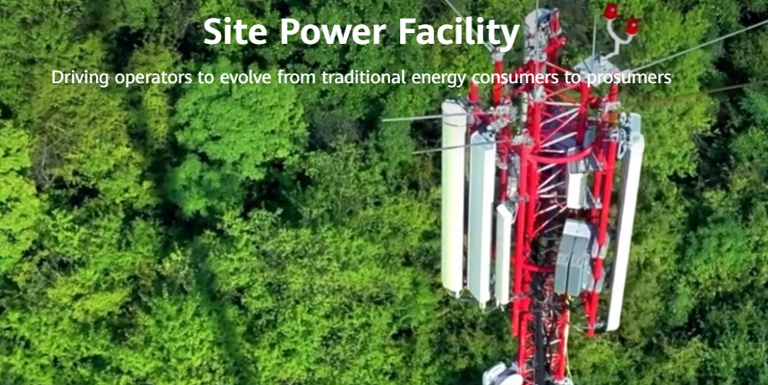
Core Concept and Evolution of Huawei Site Power Solutions
When people talk about Huawei, their first thoughts often turn to smartphones or telecom equipment, but the company’s Site Power division has quietly built a reputation as a hidden workhorse for global infrastructure. At its core, Huawei Site Power refers to end-to-end power systems designed for diverse sites—from remote 5G base stations and cloud data centers to industrial manufacturing parks and residential smart communities—focused on three key goals: uninterrupted power supply, minimal energy waste, and intelligent management. Unlike traditional power setups that rely on grid-only connections or fossil fuel backups, Huawei’s solutions integrate renewable energy sources, energy storage, and AI to adapt to each site’s unique needs. The evolution of this division dates back over two decades, starting with the demand for reliable power in rural telecom networks in emerging markets. Back then, many remote base stations faced frequent outages due to fuel shortages or harsh weather, leading to lost connectivity for millions. Huawei stepped in to design compact, durable power systems that could operate on limited resources, laying the groundwork for what’s now a global portfolio of site power products.
A key distinction of Huawei’s approach is its focus on site-specific customization, rather than one-size-fits-all solutions. For example, a base station in the Sahara Desert has completely different requirements than a data center in northern Europe: the former needs dust-resistant equipment and high solar integration, while the latter needs precise temperature control and grid stability. Huawei’s teams work with local partners and clients to assess factors like climate, energy availability, and operational needs before designing a tailored system. This customer-centric approach has helped the company capture market share in regions where power infrastructure is underdeveloped, such as sub-Saharan Africa and Southeast Asia, as well as in mature markets like North America and the EU where efficiency is a top priority. For instance, in regions with frequent grid instability like parts of Africa, traditional power systems can experience voltage fluctuations that damage sensitive telecom equipment, leading to costly repairs. Huawei’s site power systems include built-in voltage regulation features that protect equipment from these issues, reducing maintenance costs by up to 40% for clients. This reliability is not just a technical benefit—it directly translates to better services for end users, whether that’s a farmer accessing market prices via mobile or a patient receiving telemedicine consultations.
Key Technological Innovations That Set Huawei Site Power Apart
The success of Huawei Site Power stems from its continuous investment in R&D, with thousands of engineers working on innovations that address long-standing pain points in power management. One standout technology is the AI-powered intelligent load management system, which uses machine learning algorithms to predict energy demand based on real-time data like weather patterns, usage history, and even upcoming events (such as a sports event that could spike telecom traffic). For a 5G base station, this system can adjust power allocation between communication equipment and backup batteries, reducing unnecessary energy consumption by up to 25% during low-demand periods. In a recent trial in Brazil, a telecom provider saw a 22% drop in monthly electricity bills after implementing this AI tool, without any impact on service quality. The AI system also learns over time, getting more accurate in its predictions as it gathers more data. In a trial with a European telecom provider, the AI adjusted power usage so effectively that during a heatwave, when both communication demand and cooling needs spiked, the system still managed to keep energy consumption flat, avoiding a 15% increase that would have been expected with manual management. This adaptability is critical as climate change leads to more extreme weather events, which put additional strain on power systems.


Another critical innovation is the hybrid energy storage and conversion system, which combines lithium-ion batteries with solar panels, wind turbines, or even diesel generators to create a seamless power supply. Huawei’s Smart PV Controller, for instance, optimizes the flow of solar energy to charge batteries and power site equipment, ensuring that no excess energy is wasted. For sites connected to the grid, this system can also feed surplus energy back into the grid, turning the site into a small power producer. In a data center in Singapore, which relies on both solar and grid power, Huawei’s hybrid system reduced the center’s carbon emissions by 35% in its first year of operation, according to the client’s annual sustainability report. Additionally, Huawei’s liquid cooling technology for power modules solves a major problem for high-density sites: overheating. Traditional air cooling is inefficient for large data centers, but Huawei’s liquid cooling systems use dielectric fluids to keep power components at optimal temperatures, cutting cooling energy use by up to 40%. This is especially valuable for hyperscale data centers, where even a small efficiency gain translates to millions in annual cost savings.
Microgrid integration is another area where Huawei leads. A microgrid is a localized energy system that can operate independently of the main grid, providing backup during blackouts and integrating renewable energy. Huawei’s site power solutions are designed to connect seamlessly with microgrids, allowing sites to switch between grid and off-grid mode in less than 0.2 seconds—faster than the time it takes for most equipment to detect a power outage. This is crucial for critical sites like hospitals or emergency response centers, where even a 10-second outage can have serious consequences. In India, a hospital in a rural area uses Huawei’s microgrid-integrated site power to ensure uninterrupted power for life support systems, even during monsoon season when grid outages are common. The system also includes remote monitoring, so Huawei’s engineers can troubleshoot issues from a distance, reducing response time from hours to minutes.
Real-World Deployments: Success Stories Across Global Markets
The impact of Huawei Site Power is best seen in real-world deployments that solve tangible problems for clients. Take the case of Airtel Kenya, a leading telecom provider that operates thousands of 5G base stations across the country’s rural and urban areas. Before partnering with Huawei, many of Airtel’s remote base stations in the Maasai Mara region relied on diesel generators, which were expensive to maintain and prone to breakdowns due to dust and extreme temperatures. In 2021, Airtel deployed Huawei’s FusionPower site power solution for 200 base stations in the area, combining solar panels, lithium-iron phosphate batteries, and intelligent power management. The results were transformative: fuel costs dropped by 70%, power outage incidents fell from an average of 12 per month to less than 1, and connectivity for local communities improved dramatically. Before the deployment, Airtel had to send maintenance teams to remote areas every two weeks to fix diesel generator issues, costing the company an average of $5,000 per trip. With Huawei’s solar-battery system, maintenance is required only once every six months, and the systems are self-monitored, sending alerts for any potential issues before they cause outages. This not only reduced operational costs but also freed up the maintenance team to focus on other critical tasks.
Another notable deployment is the EdgeCore data center in Frankfurt, Germany, which is designed to support cloud services for European enterprises. EdgeCore chose Huawei’s site power system to meet its strict requirements for reliability, efficiency, and compliance with the EU’s Carbon Neutrality targets. The solution integrates 100% renewable energy from nearby wind farms, with energy storage that can supply the data center for up to 8 hours during low wind periods. Huawei’s AI load management system adjusts power consumption based on the data center’s workload, ensuring that only necessary equipment runs at any time. Since the data center went live in 2022, its PUE (Power Usage Effectiveness) – a key metric for data center efficiency – is 1.08, which is well below the industry average of 1.5. This has allowed EdgeCore to reduce its annual energy costs by €2.3 million and cut its carbon emissions by 42%, earning it a top rating from the German Federal Environment Agency. The data center also plays a role in the local grid: when demand is high, it feeds excess stored energy back into the grid, helping to stabilize the regional power network.
In China, a leading automotive parts manufacturer in Guangzhou faced challenges with high energy costs during peak demand hours, when the local grid imposed surcharges on industrial users. The manufacturer turned to Huawei’s site power solution, which combines solar panels, battery storage, and demand response capabilities. The system stores excess solar energy during the day and uses it to power the factory during peak hours, avoiding the grid surcharges. Additionally, the solution integrates with the factory’s production line, adjusting power use to match production schedules. Within six months of implementation, the manufacturer reduced its energy bills by 28% and cut its peak demand by 32%, helping it meet the Chinese government’s industrial energy efficiency goals. This deployment also set a benchmark for other manufacturing plants in the region, with over 10 similar projects being rolled out in Guangdong province since then. The manufacturer reported that the system has also reduced its carbon footprint by 2,100 tons per year, contributing to its corporate sustainability targets.
Future Trends and the Role of Huawei Site Power in Net-Zero Goals
As the world accelerates its transition to net-zero carbon emissions, the demand for intelligent, sustainable site power solutions will only grow, and Huawei is positioned to play a key role in this shift. One major trend is the integration of site power with the Internet of Things (IoT) and smart city platforms. Huawei is developing solutions that connect site power systems to city-wide energy management networks, allowing for dynamic optimization of energy use across multiple sites. For example, a smart city could use data from telecom base stations, data centers, and public buildings to balance energy supply from renewables, reducing strain on the main grid and lowering overall carbon emissions. This will be especially important as smart cities expand, with billions of connected devices requiring reliable power, from smart streetlights to autonomous vehicle charging stations. Huawei’s recent pilot in Shenzhen, a leading smart city in China, has already tested this integration, cutting the city’s overall energy waste by 12% in the pilot area.
Another future direction is the adoption of more advanced energy storage technologies, such as solid-state batteries and flow batteries, which offer longer lifespans and higher safety than current lithium-ion batteries. Huawei’s R&D team is already testing these technologies in lab settings, with plans to integrate them into site power products by 2027. These batteries will enable sites to store more energy for longer periods, making it easier to rely on renewables even when the sun isn’t shining or the wind isn’t blowing. Additionally, Huawei is working on solutions for electric vehicle (EV) charging stations, which are becoming more common as the world shifts away from fossil fuel-powered cars. Their site power solutions for EV chargers will integrate renewable energy and intelligent load management to ensure fast, affordable charging without overloading the grid. In a recent partnership with a leading EV provider in Europe, Huawei is testing charging stations that use solar energy and battery storage, reducing charging costs by 30% for users.
Looking ahead, Huawei Site Power will also focus on expanding its reach to new types of sites, including residential smart communities and small businesses. For residential areas, Huawei is developing compact site power systems that combine rooftop solar, battery storage, and smart meters, allowing homeowners to generate their own electricity, reduce utility bills, and even sell excess energy back to the grid. This aligns with global efforts to decentralize energy production, giving more control to individuals and communities. Huawei is also partnering with international organizations like the United Nations to bring site power solutions to underserved regions, where access to reliable electricity is still a major barrier to development. By 2030, the company aims to power over 1 million sites worldwide with its sustainable site power solutions, helping to cut global carbon emissions by 500 million tons annually. As the demand for green infrastructure continues to rise, Huawei Site Power will remain a critical player in building a more reliable, efficient, and sustainable global power ecosystem.